Health Information

Learn step by step how to care for your knee joints—don’t wait, start learning now!

Release Date:

2022-07-07 17:42
The knee joint is the largest and most complex joint in the human body.
 
Human survival and daily activities are often dependent on the assistance of the knee joint.


As is well known, the knee joint is surrounded by numerous ligaments and muscles; however, it has a “critical” drawback: relatively few nerves and blood vessels in the surrounding area. For this very reason, knee injuries typically do not heal quickly.


Therefore, learning how to properly care for your own knee joint is absolutely essential!
 
 
The knee joint is one of the weight-bearing joints in the human body, and studies have shown that it bears approximately 70% of the body’s weight.
 
The greater the load borne, the higher the likelihood of articular cartilage wear and tear, the more prone tendons are to injury, and the faster knee joint degeneration progresses.
 
The load multipliers for the knee joint are as follows:
 
1. When lying down, the load on the knee joint is nearly zero.
 
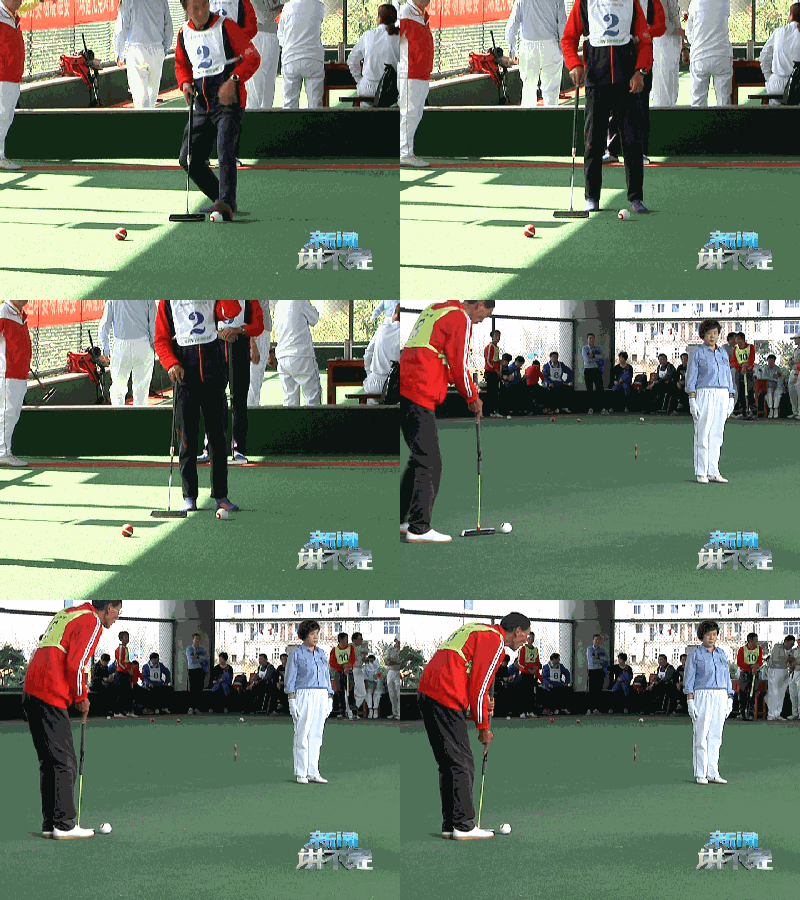
2. When standing up and walking, the load on the knee joint is approximately 1 to 2 times body weight.
 
3. When going up or down slopes or stairs, the load on the knee joint is approximately 3 to 4 times body weight.
 
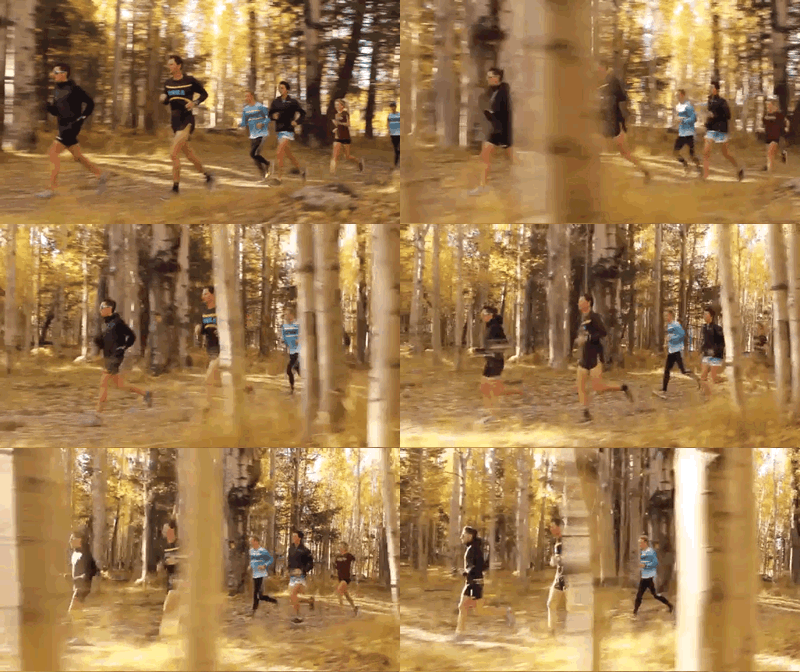
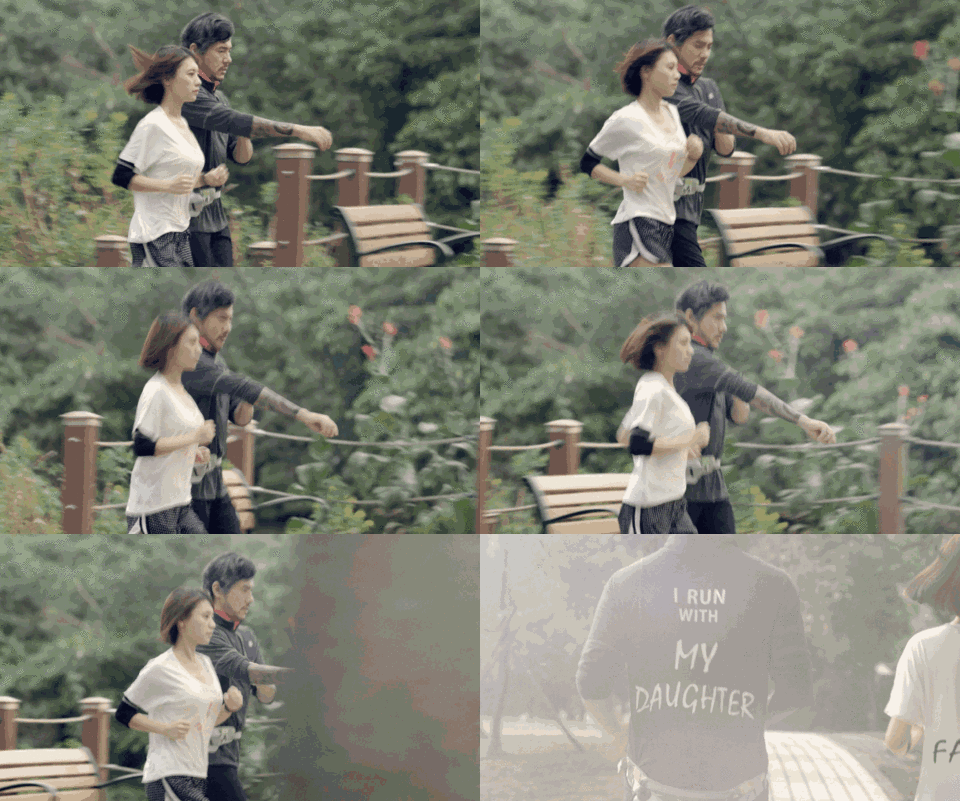
4. During running, the knee joint bears approximately four times its body weight.
 
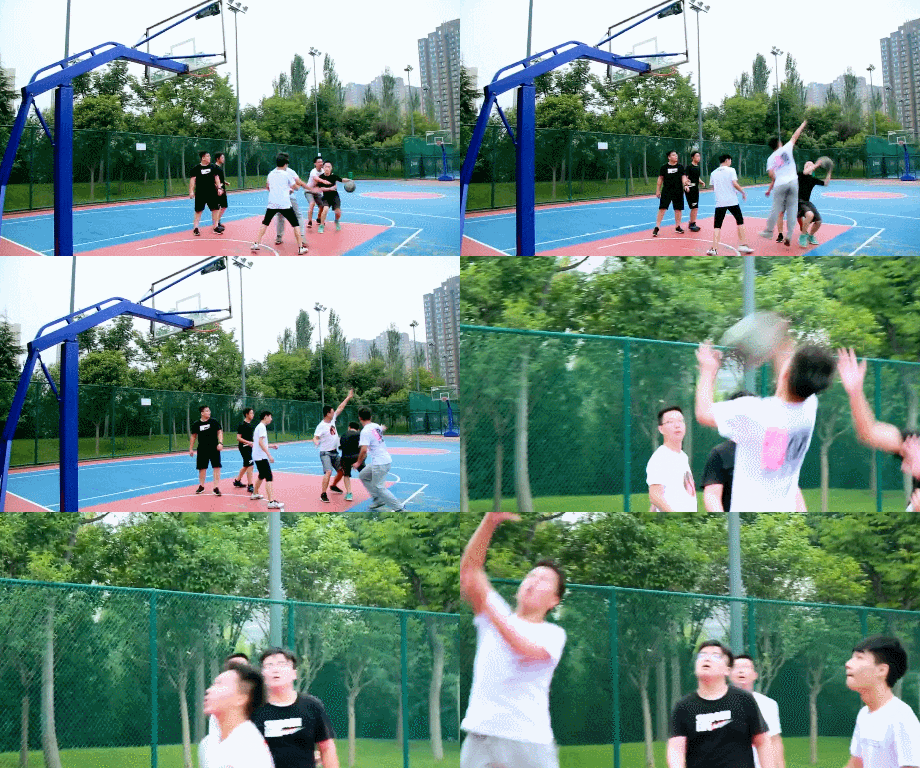
5. During basketball, the knee joint bears approximately six times its body weight.
 
6. When squatting or kneeling, the load on the knee joint is approximately eight times body weight.
 
For example, a person weighing 50 kg experiences approximately 200 kg of load on the knee joint with each step taken. (Calculation method: 50 kg × 4 times)


The Best 15 Years of the Knee Joint
 
Before the age of 15: The knee joint is still in the developmental stage, and growing pains during adolescence often occur around the knee.
 
Ages 15 to 30: The knee joint is in “perfect condition” and can function virtually “without fatigue.” As long as the knee joint tissues are not damaged, pain is generally not felt.
 
Ages 30–40: Early, mild cartilage wear in the patella can lead to a transient period of vulnerability, characterized by short-term knee soreness that lasts from several weeks to several months; in some individuals, this discomfort may even go unnoticed.
 
The patellar cartilage is a 3–5 mm-thick layer of hyaline cartilage within the human knee joint, which helps to cushion the impact generated during movement. However, since the patellar cartilage lacks nerve innervation, it emits only a single “early warning signal” during its vulnerable phase before full-thickness wear occurs; during this period, strenuous exercise should be avoided. It was from this point onward that I could no longer use my knee joint as freely as before.
 
Ages 40–50: After prolonged walking or standing, the medial compartment of the knee often becomes tender and achy, a discomfort that typically eases with gentle massage. Within the knee joint, the menisci serve to absorb shock and maintain joint stability. Notably, 60% of body weight is borne by the medial compartment of the knee, which is why degenerative changes in the medial meniscus tend to occur relatively early. Moreover, since the menisci are innervated, patients can perceive pain and soreness as degeneration progresses. The onset of these symptoms is a clear signal: it’s time to start taking steps to protect and maintain joint health.


Age 50 and above: You will experience significant pain in the knee joint, because the patellar cartilage has reached the end of its “service life,” with full-thickness wear and tear, leading to the development of osteoarthritis. At this stage, it is important to conserve the joint by minimizing strenuous activities, especially climbing stairs or hiking; when necessary, using a cane can help reduce the load on the knee.
 

Little tips for daily knee joint care:
 
1. Avoid prolonged walking or standing, and rest immediately as soon as you experience any discomfort in the knee joint.


2. Avoid high-intensity exercises such as running, high jump, and long jump as much as possible.


3. Avoid half-squats, full squats, or kneeling positions, such as the horse stance.


4. Avoid performing left or right turns while in a half-squat or full-squat position to prevent meniscal injury.


5. Maintain an ideal body weight to reduce the load on the knee joint.


6. Keep your knees warm by wearing long pants and knee braces to protect the joint.


7. Avoid lifting heavy objects and wearing high heels.


8. Avoid trauma and excessive physical exertion.
 
9. Choosing the right shoes is very important. A well-fitting pair of shoes not only ensures comfortable walking but also reduces the impact and pressure on the knee joints during physical activity.


(1) The instep area fits snugly against the shoe, with appropriate width and length, thereby properly maintaining the arch of the foot.
(2) Shoes should be lightweight; the soles should not be overly soft and should have some thickness.
(3) The heel of the shoe can be about 2–3 centimeters high; if the sole is too flat, you’re likely to get tired easily when walking.
(4) The sole features a non-slip tread.


In addition, one can regularly practice the knee-joint exercise and bone-nourishing techniques of the Pingle Guo School of Orthopedics to strengthen the muscles surrounding the knee joint, enhance joint stability, and alleviate related knee symptoms.
 
Even in the absence of pain or trauma, daily moxibustion or gentle acupressure around the knee joint can also provide health-promoting benefits.

Keywords: